
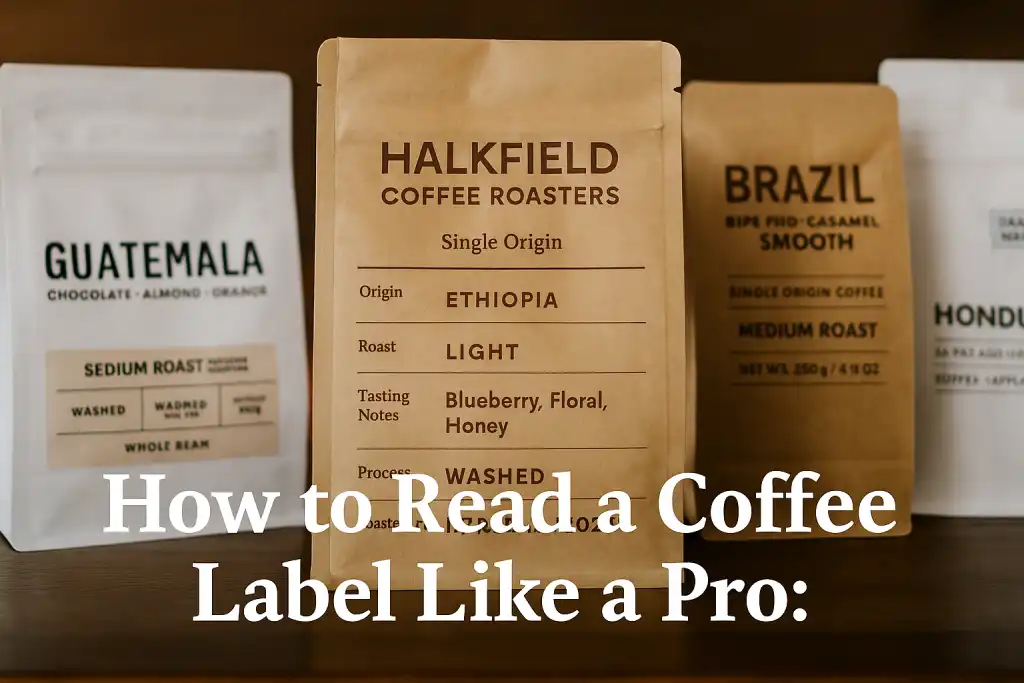
Ever stood in a specialty café or supermarket aisle, overwhelmed by coffee bags with terms like single-origin, light roast, washed process… and thought, “What does all this mean?”
In this blog, we break down the key elements of a coffee label so you can shop and sip like a pro.
🔍 1. Coffee Origin: Where It Comes From
Origin tells you which country (or even farm) the coffee was grown in and it makes a difference.
- 🌍 Ethiopia: Floral, fruity, tea-like
- 🌋 Colombia: Balanced, chocolatey, nutty
- 🏞️ Brazil: Low acidity, creamy body
- 🌄 Kenya: Bold, citrusy, complex
- 🏔️ Yemen: Spicy, rich, wild
Some bags even list the farm, elevation, and cooperative, especially for single-origin coffees.
📝 Higher altitudes usually produce more complex flavor profiles.
🔥 2. Roast Level: Light, Medium, or Dark?
The roast profile affects flavor, body, and caffeine level.
- Light Roast
- Flavor: Bright, acidic, fruity
- Ideal for: Pour-over, black coffee lovers
- Preserves bean origin characteristics
- Medium Roast
- Flavor: Balanced, caramel, nutty
- Ideal for: Espresso, French press
- Dark Roast
- Flavor: Bold, smoky, bitter chocolate
- Ideal for: Milk-based drinks (e.g. lattes)
🎯 Roast level matters as much as origin. It’s not just about “strong” vs. “weak.”
🧪 3. Processing Method: Washed, Natural, or Honey
This refers to how the coffee bean was extracted from the cherry:
- Washed (Wet): Clean, bright flavor
- Natural (Dry): Fruity, wine-like, heavier body
- Honey Process: Sweet, syrupy, balanced
⚙️ These methods shape the texture and clarity of the coffee-big time.
📆 4. Roast Date > Expiry Date
Always check the roast date instead of the expiry.
- Best flavors peak between 7–21 days after roast
- Try to brew within 30–45 days for optimal freshness
📅 Stale beans = flat coffee.
📦 5. Whole Bean or Ground?
Whole beans keep their flavor longer and are best if you have a grinder at home. If buying ground, check:
- Grind size (e.g., espresso vs. French press)
- Whether it’s nitrogen-flushed for freshness
🧠 6. Specialty Score (Optional)
Some high-end roasters list an SCA score (Specialty Coffee Association):
- 80–84 = Very Good
- 85–89 = Excellent
- 90+ = Outstanding
🎖️ This is a mark of quality similar to wine ratings.
✨ Bonus: What Do Coffee Flavor Notes Mean?
Labels often describe flavor notes like:
“Apricot – Toffee – Jasmine – Clean Finish”
🛑 This doesn’t mean it contains those ingredients it means the bean naturally tastes like them, much like wine.
☕ Final Thoughts
Understanding a coffee label helps you:
- Choose the right beans for your taste
- Brew better at home
- Support ethical sourcing
- Explore the world through coffee
🔗 Learn More or Explore:
- Discover new cafés on our Coffee Directory
- Read more brewing tips on our Blog
- Want personalized help picking beans? Contact Us